A Year Since Love My Face – What It Taught Me About Leadership
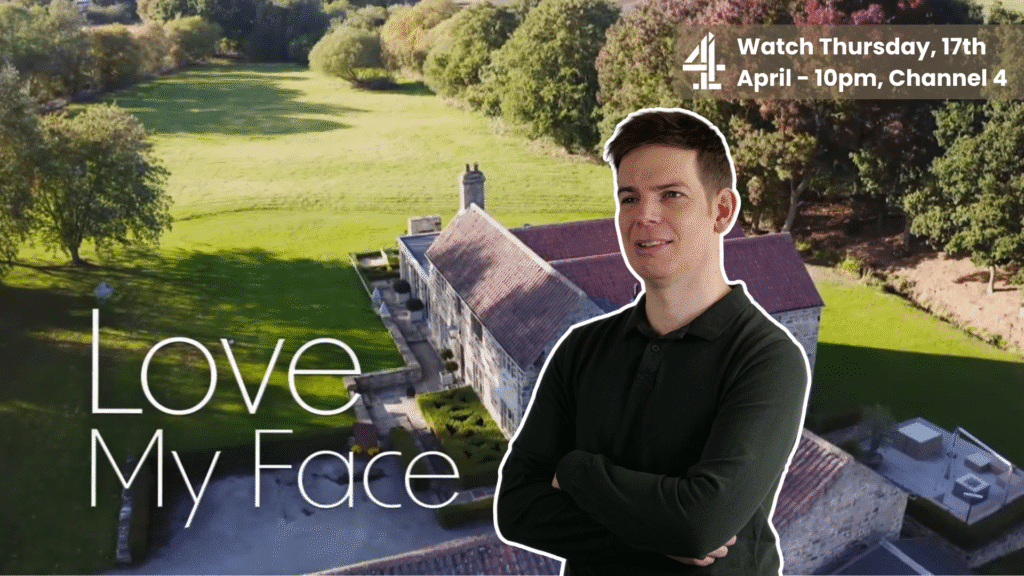
A year ago this week, I did something I’d spent most of my adult life avoiding.
I let the world see my face.
Not just the Bell’s Palsy – the asymmetry, the side that doesn’t move the way the other does. That was always visible to anyone who looked. What I mean is I let people see what was behind it. The insecurity I’d carried since I was 18. The depression and anxiety I’d hidden behind a successful business. The twenty years of quietly, expertly, managing how I showed up so nobody would see what was really going on.
When Love My Face aired on Channel 4 on 17th April 2025, I felt something I hadn’t expected…. relief.
Not because anything had changed. But because there was nothing left to hide.
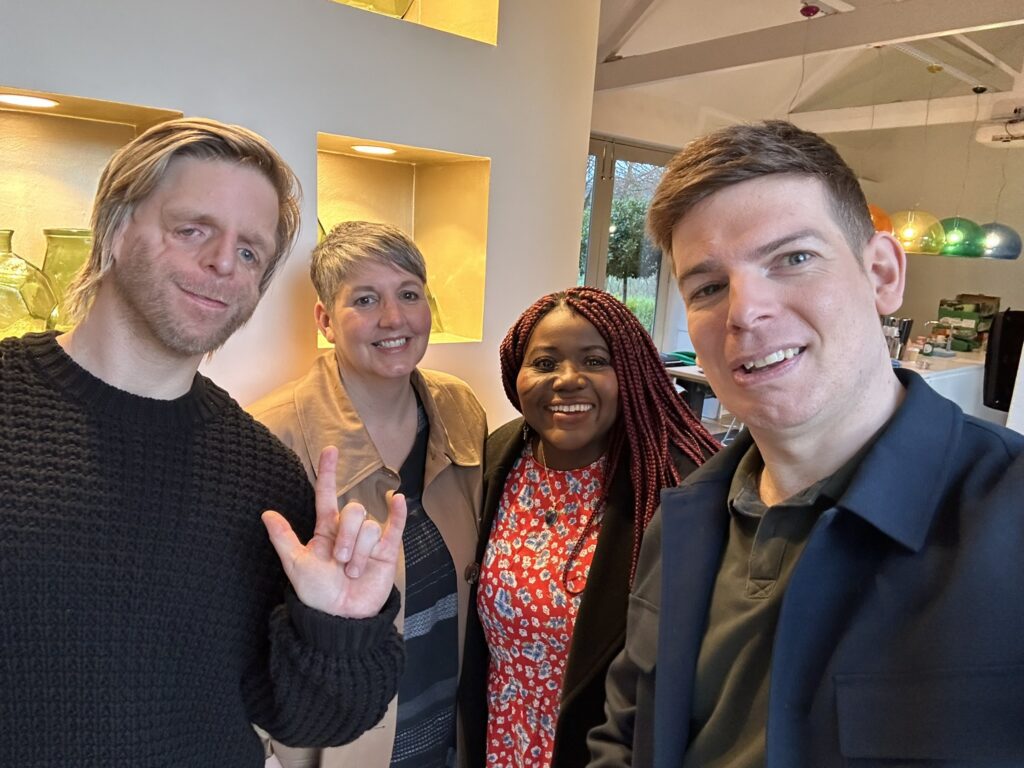
Two masks, one lesson
Here’s what I’ve understood more clearly in the year since.
I spent my life wearing two masks simultaneously – and I only ever talked about one of them.
The first was the one Bell’s Palsy gave me. One side of my face moves differently to the other. I became acutely aware of that at 18, and from that point I adapted. I adjusted how I presented myself, managed how people perceived me, and got very good at anticipating how a room might react before I’d said a word.
The second mask was the one leadership culture handed me and told me to wear. Always confident. Always capable. Always delivering. Never struggling, never uncertain, never anything less than in control. I built a multi-award-winning business over fifteen years. From the outside, I had it together. Behind it, I was battling severe depression and anxiety, running on empty, and proving myself to an audience that had no idea I felt like I didn’t quite belong.
The cruel irony is that the skills I’d developed managing my facial difference – reading rooms, managing perceptions, adapting how I showed up – made me exceptionally good at hiding in leadership too.
I thought I was coping. I was performing.
What the mask costs
The problem with wearing a mask long enough is that you stop noticing you have it on.
The leaders I work with now – and I see this pattern constantly – aren’t hiding because they’re weak. They’re hiding because the culture around them has rewarded it. Showing vulnerability feels like risk. Being honest about struggle feels like exposure. Admitting you’re not okay feels like it might cost you the room.
So they push harder. They prove more. They say yes when they mean no and hold it together when they’re falling apart. And for a while, it works. Until it doesn’t.
I know this because I lived it. By the time I recognised what my mental health was costing me, I’d already paid a price I couldn’t easily recover. That’s what finally drove me to leave the business I’d built, step back, and ask an honest question I’d been avoiding for years: who am I when the performance stops?
That’s not a comfortable question. But it’s the most important one a leader can ask.
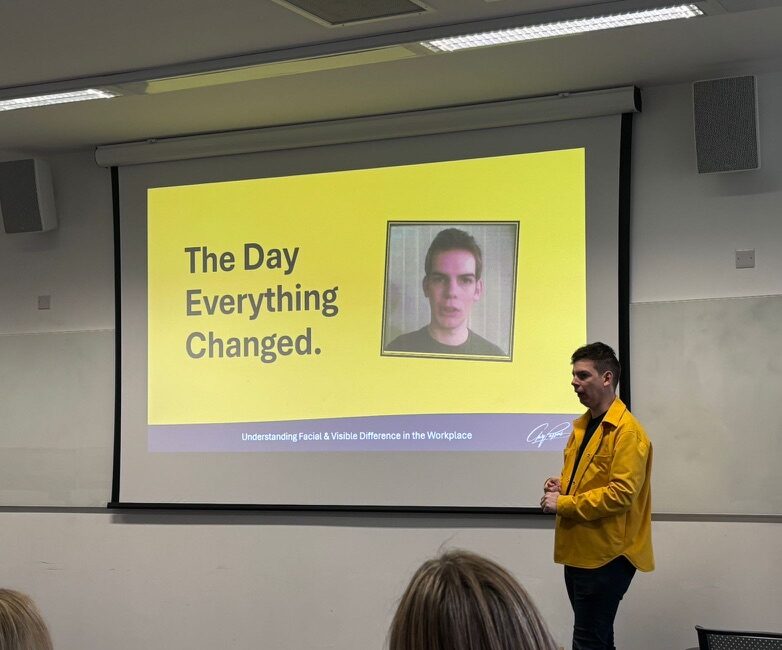
What taking the mask off actually looks like
Appearing on Love My Face wasn’t a cure. It wasn’t a transformation. It was a decision to stop hiding one part of myself – and in doing that, it became harder to justify hiding the rest.
In the year since, I’ve spoken on stages about mental health in leadership. I’ve worked with leaders who are quietly struggling behind polished exteriors. I’ve deepened my work with Facial Palsy UK as a volunteer and with Changing Faces UK as an official campaigner, because the conversation about how we’re seen – and how we see ourselves – matters in every room, not just the ones we think of as inclusive spaces.
And I’ve come to believe that authentic leadership isn’t a soft skill or a nice-to-have. It’s the foundation. Leaders who know who they are beneath the role, who have done the honest work of understanding what they’re carrying and why, lead better. They make better decisions. They build teams that actually trust them. They build businesses that last.
This is what I mean by Selfish Leadership – not selfishness at the expense of others, but the deliberate commitment to know yourself, lead yourself, and stop outsourcing your sense of worth to your results.
A year on…
I still have Bell’s Palsy. I still have hard days. I’m still learning.
But I’m not hiding. And that changes everything – how I lead, how I show up, and how I help other leaders do the same.
If you’re a leader carrying something you haven’t said out loud yet, this is me telling you: the mask is heavy, and you don’t have to keep wearing it.
The leaders who build something genuinely sustainable aren’t the ones who hold it together perfectly. They’re the ones who got honest.

Gary Parsons
https://garyparsons.ukGary Parsons is a Leadership Speakerand Business Mentor on a mission to redefine success in leadership. Drawing on his powerful SELF Framework, Gary helps leaders prioritise their own wellbeing because when leaders thrive, their teams do too. Through his talks, workshops, and mentoring, he equips leaders to set boundaries, elevate wellbeing, and lead with intention - proving that Selfish Leadership isn’t a weakness, it’s a strategy for sustainable growth. Reach out to explore how Gary can help your leaders perform better by putting themselves first, strategically.