Boundaries at Work: Improve Performance and Wellbeing

Most people aren’t struggling at work because they can’t do their job. They’re struggling because the way we work today makes it difficult to perform at a high level consistently.
Constant interruptions, always-on expectations, and increasing pressure mean that even capable people find themselves overwhelmed, reactive, and stretched thin. It’s not unusual to finish the day feeling busy, but unsure what was actually achieved.
The issue isn’t time – it’s boundaries.
The real problem isn’t workload, it’s how work shows up
Look at a typical working day for many managers and leaders:
- Back-to-back meetings
- Messages coming in constantly
- Emails that feel urgent
- Little to no uninterrupted thinking time
On top of that, work rarely stops at the end of the day. It follows people home, sitting in the back of their mind, waiting to be picked up again tomorrow.
Over time, this creates:
- Mental overload
- Reduced focus
- Poorer decision-making
- Ongoing fatigue
Effort stays high, but performance starts to drop.
Why boundaries matter more than ever
Boundaries are often misunderstood.
They’re seen as:
- Saying no
- Pushing back
- Being less available
But in reality, boundaries are not about doing less. They’re about protecting your ability to do your job well.
When boundaries are unclear, everything becomes urgent. Attention gets pulled in too many directions, and people move into reactive mode.
When boundaries are intentional, something shifts:
- Focus improves
- Decisions become clearer
- Work feels more controlled
- Pressure becomes manageable
This is where performance changes.
The three boundaries that actually improve performance
Instead of thinking about boundaries as a single idea, it’s more useful to break them into three practical areas.
1. Focus boundaries
Focus boundaries protect your attention. Without them, your day becomes fragmented. You move from task to task, never fully engaging with any of them. With them, you create space for meaningful work.
This might look like:
- Blocking time for deep work
- Reducing unnecessary context switching
- Being intentional about what gets your attention
2. Access boundaries
Access boundaries control who and what gets to you. In most roles, access is unlimited. Messages come in constantly, and there’s an expectation to respond quickly. Over time, this creates constant interruption and pressure.
Strong access boundaries might include:
- Setting expectations around response times
- Not being instantly available for everything
- Creating clear communication windows
This isn’t about being unavailable. It’s about being intentional.
3. Recovery boundaries
Recovery boundaries protect your ability to sustain performance. Without recovery, pressure becomes continuous. The brain never resets, and fatigue builds. With recovery, you create separation from work.
This might include:
- Switching off at the end of the day
- Not carrying work mentally into personal time
- Creating space to reset between periods of pressure
Performance isn’t just about how you work. It’s about how you recover.
What happens when boundaries are missing
When boundaries aren’t in place, the impact is wider than most people realise. Leaders become bottlenecks because everything flows through them, teams become dependent because problems are constantly solved for them, decision-making becomes reactive instead of intentional, and over time, performance declines, even though effort remains high.
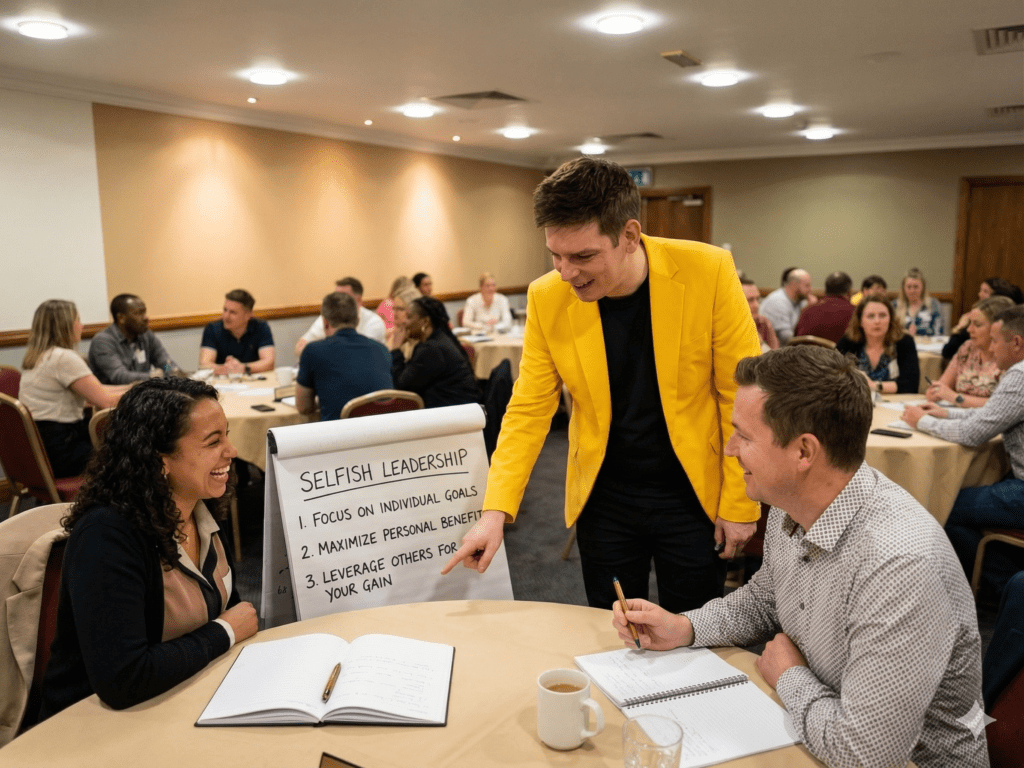
This is why boundaries are not just a personal preference. They are a performance requirement, a different way to think about boundaries. oundaries are often framed as something personal or even selfish, but when you look at them through a performance lens, they become something else entirely.
They are a way of managing:
- Attention
- Energy
- Time
- Decision-making
In other words, they are a way of taking responsibility for how you show up at work. When applied consistently, this aligns closely with the idea that better self-management leads to better outcomes, not just individually, but across teams and organisations.
Final thought
Most people don’t need to work harder.
They need to work in an environment that allows them to think clearly, make better decisions, and sustain their performance over time.
Boundaries are what make that possible.
🟡 Want to take this further? Lunch & Learn Available.
If this resonates, I run a practical lunch and learn session:
Boundaries for Performance and Wellbeing at Work
It’s a 45-minute session (plus Q&A) designed for managers and leaders, focused on helping teams:
- Improve focus in high-demand environments
- Manage interruptions more effectively
- Reduce mental overload
- Perform sustainably under pressure
If you’re planning something for your team, or for Mental Health Awareness Week, feel free to get in touch to find out more.

Gary Parsons
https://garyparsons.ukGary Parsons is a Leadership Speakerand Business Mentor on a mission to redefine success in leadership. Drawing on his powerful SELF Framework, Gary helps leaders prioritise their own wellbeing because when leaders thrive, their teams do too. Through his talks, workshops, and mentoring, he equips leaders to set boundaries, elevate wellbeing, and lead with intention - proving that Selfish Leadership isn’t a weakness, it’s a strategy for sustainable growth. Reach out to explore how Gary can help your leaders perform better by putting themselves first, strategically.