Leadership Development Budget 2027

How to make the case for leadership development in your 2027 budget
The budget meeting is running long. Someone from finance scrolls down the sheet, stops at one line and asks the question you knew was coming. “Leadership development. What exactly do we get for this?”
You’ve got thirty seconds. It’s a small line next to headcount and tech, which makes it the easiest one to cut, because nobody can point to a single invoice it would have saved.
I’ve sat on both sides of that table. I ran a multi-award-winning business for over a decade, so I’ve been the person asking and the person without a good enough answer. If you’re planning your leadership development budget for 2027, the conversation is happening now. Here’s how to win it.
Stop asking for development and start asking for sustainable performance
Finance doesn’t fund “development”. It funds output that lasts, decisions that hold up and risks that are managed.
So change the frame – you’re not asking for a programme, you’re asking to protect the people making the biggest decisions in the business. This is a performance conversation that needs to happen, and not a wellbeing one.
Sustainable leadership performance is a sentence a finance director can repeat in the next meeting. “Leadership training” usually isn’t.
Argument one: employers are telling us which skills matter, and they’re human ones
The World Economic Forum’s Future of Jobs Report 2025 is the best neutral evidence you can put in front of a board.
- Employers rated resilience, flexibility and agility as core skills for 2030, at 67%
- Leadership and social influence came in at 61%
- The report also expects 39% of workers’ core skills to change by 2030
Keep the claim modest. This shows what employers say they need, not proof that any one method works. But it kills the “is this a nice-to-have?” question. The skills at the top of that list are the ones your leaders use every day.
Argument two: the people deciding are the last to see their own gaps
This is the one finance leaders remember.
Tasha Eurich’s research, published in Harvard Business Review, suggests most people think they’re self-aware, while an estimated 10 to 15 per cent actually are. She also notes that power and experience can make it harder, not easier.
Put that in budget terms. The more senior the decision, the less honest feedback it gets. Decision quality depends on a leader’s blind spots, and that’s a business risk you can describe without a single soft word.
Argument three: leaders already know it affects their decisions
In research I’ve run with East Midlands leaders, three-quarters said their wellbeing affects the quality of their decisions. Fewer than one in twenty actively prioritise it.
That gap is the budget case in one sentence. Leaders can see the risk, and almost none of them are doing anything about it.
Argument four: the cost of pressure is already on your sheet
You don’t need a new statistic. You need the ones you already hold.
The CIPD’s Health and wellbeing at work 2025 report found average sickness absence rose to 9.4 days per employee, up from 7.8 in 2023 and 5.8 in 2022. It also found only half of organisations think their stress reduction efforts are effective.
That second figure matters more. Most organisations are already paying for the symptoms, yet few are investing in the people who set the workload, the pace and the example for everyone else.
Then add your own numbers. Pull the cost of replacing your last senior leader, including recruitment, handover and lost momentum, and put it next to the proposed spend. I can’t give you that number, and your finance team will trust yours more than mine.
Be honest about ROI
Leadership development ROI is hard to prove, and anyone who promises a neat percentage is selling something. Finance knows that.
So say it first. Then offer what you can measure: a small set of indicators agreed up front, such as leader retention, team engagement and absence among your leadership population, reviewed at six and twelve months. Credibility comes from being clear about what you can and can’t show.
A one-page structure you can lift into your proposal
One page, six headings. If it doesn’t fit on a page, finance won’t read it.
- The issue: One sentence on the pressure leaders are under, in your organisation’s terms.
- The evidence: Two or three sourced points from above, linked.
- The cost of doing nothing: Your own attrition, absence and replacement figures.
- The proposal: What you’ll do, for whom and over what period.
- The measures: Three indicators, a baseline and review dates.
- The ask: A specific figure and a decision date.
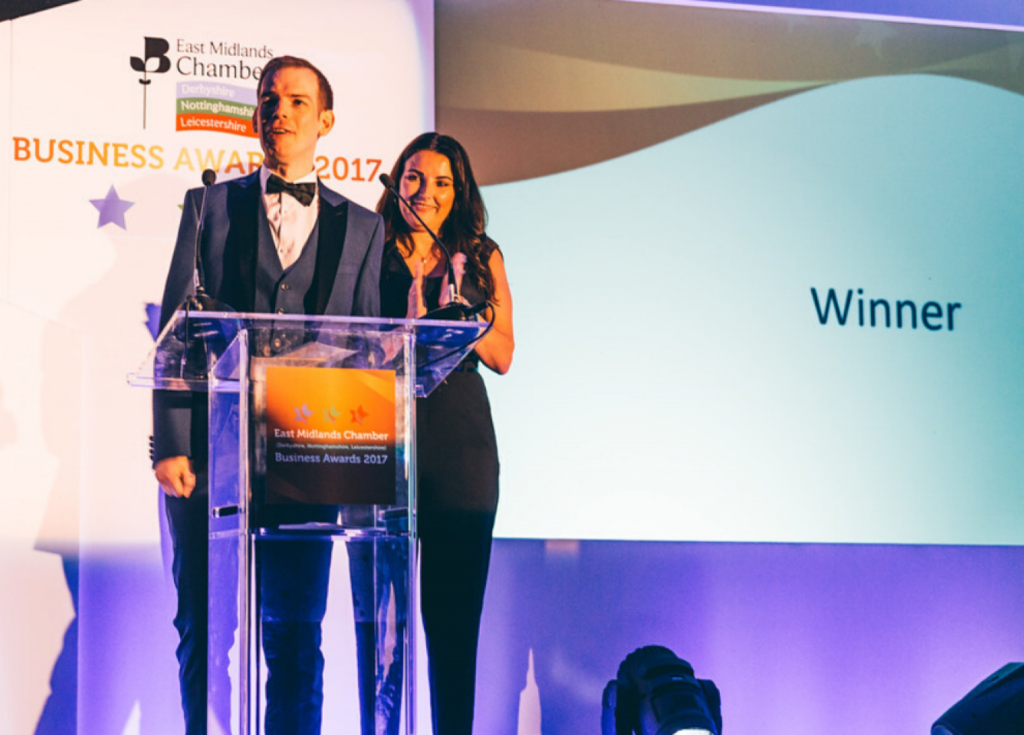
The year we won an award for developing our people
In 2017, at what looked like the highest point of visible success, the business I used to co-own won an award for the way we developed our people. I was in the photo, developing everyone else. The one person who’d completely disengaged was me.
That’s the gap in most leadership budgets. The programme covers the team, and the person carrying the most is left to work it out alone. They’re also the person least likely to ask.
My view
The leaders who protect their capacity aren’t the selfish ones in the room. They’re the ones who win.
That’s why I wrote Selfish Leaders Win. I help leaders and founders be more selfish, because when you put yourself first, you handle pressure better, lead with more clarity, and build performance that actually lasts. Put that way, it’s the cheapest risk control a business has.
Start small with a lunch and learn
If you’re not ready to put a full programme in the budget, start smaller. A lunch and learn for your leadership team costs little and takes an hour. It shows you quickly whether the conversation lands, and it gives you something real to point to in the proposal.
If you want to talk it through, book a conversation. And if you know someone else drafting a 2027 budget this month, forward them this post.
For more on where leadership development is heading, read Leadership Development in 2026: Trends and Predictions.

Gary Parsons
https://garyparsons.ukGary Parsons is a Leadership Speakerand Business Mentor on a mission to redefine success in leadership. Drawing on his powerful SELF Framework, Gary helps leaders prioritise their own wellbeing because when leaders thrive, their teams do too. Through his talks, workshops, and mentoring, he equips leaders to set boundaries, elevate wellbeing, and lead with intention - proving that Selfish Leadership isn’t a weakness, it’s a strategy for sustainable growth. Reach out to explore how Gary can help your leaders perform better by putting themselves first, strategically.