Is AI Reducing Leadership Pressure, or Raising It?

The Hour AI Gave You Back. Where Did It Go?
A leader I know automated a report that used to eat up his Thursday afternoon, and he was pleased with himself, telling his team he’d finally get some breathing room and maybe even leave on time for once.
By the following week, that afternoon was full again, not with rest but with three more meetings his assistant had quietly slotted in because the time was there. Nobody made him do that, he did it himself, and that’s the part of this AI conversation that isn’t getting said out loud.
I hear some version of that story most weeks, sitting with senior leaders across professional and financial services, and it’s rarely a one off. It’s a pattern, and patterns are worth paying attention to.
AI was supposed to lighten the load on leaders. For most, it’s doing the opposite, and the reason isn’t the technology itself.
The AI skills pressure everyone can see
There’s a version of this story that gets told a lot, where leaders are meant to already be fluent in AI on top of everything else they’re carrying, and nobody’s adjusting expectations to account for that. It’s real but learning a new way of working while still delivering the old targets is genuine added weight, and it lands hardest on the people meant to be showing everyone else the way.
The invisible workload AI is adding for leaders
AI was meant to hand leaders something they’ve been short of for years, time and headroom, space to think properly instead of react, and room to make a decision instead of just clearing the next task off the list.
That’s not what’s happening though. A Harvard Business Review study led by researchers at UC Berkeley followed around two hundred employees at a tech company over eight months, in a workplace where using AI was entirely optional, and the people who adopted it didn’t end up with more space at all. They took on more work, stretched their hours further, and the researchers ended up calling it workload creep, with fatigue and weaker decisions following close behind.
Workday’s late 2025 research into productivity found something similar at the organisational level, where roughly a third of the companies they studied responded to time saved through AI by simply loading more work onto people, rather than using that time to develop them.
So the capacity is real, it’s just not going where you’d expect. Leaders aren’t coming out of it sharper or calmer, they’re just being asked to carry more before something finally gives.
That gap between what leaders know they should do and what they actually do under pressure is one I’ve researched directly. Working with the East Midlands Chamber of Commerce, we surveyed 338 leaders and found that 75% of them agreed their wellbeing affects the quality of their decisions. Fewer than 5% said they actively prioritise it. Everyone can see the link, but almost nobody is acting on it, and AI is about to make that gap wider, not smaller.
Why AI adoption pressure lands hardest on leaders
This lands harder at the top than anywhere else. Research from the AI platform Writer found that well over half of enterprise leaders are worried about their own job security if they can’t successfully steer their organisation through AI adoption, and underneath that fear sits something no training programme touches, leaders quietly carrying the risk of the whole transition on their own shoulders.
Most of them are doing it without an accurate read on how their teams actually feel, and Boston Consulting Group’s research, published in Harvard Business Review, found that three quarters of executives believed their people were enthusiastic about AI, while fewer than a third of those people said the same about themselves. Leaders are managing a shift they think looks one way, while the room in front of them is experiencing it another way entirely, and that gap doesn’t show up on a dashboard, it just sits there, adding weight.
We’ve run this experiment before…
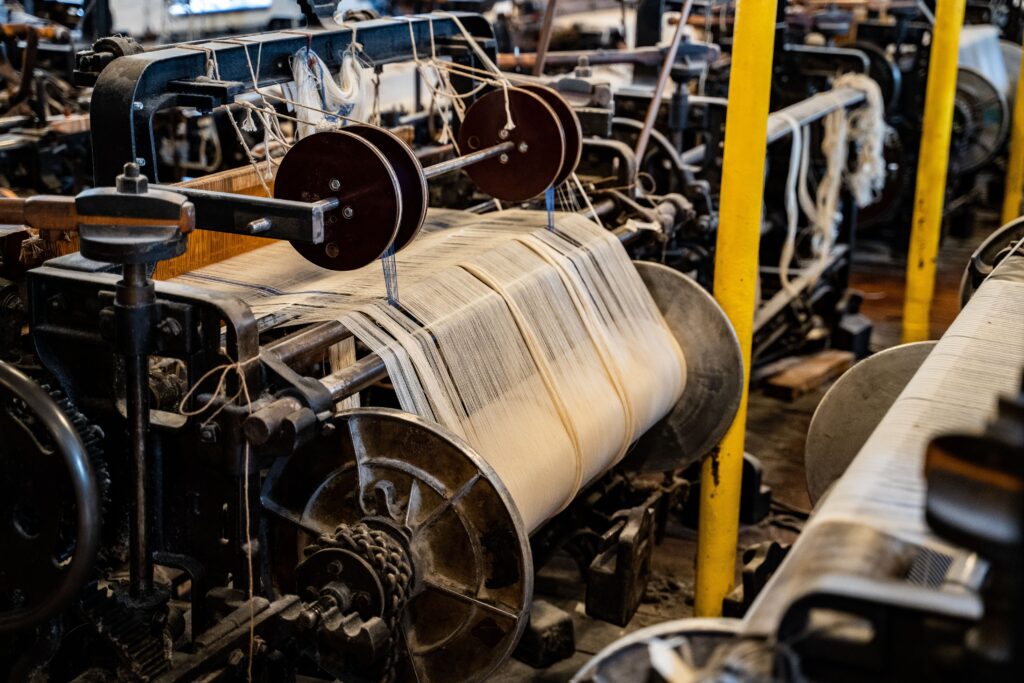
This isn’t the first time a new technology has promised to hand people their time back. The industrial revolution ran the same experiment, just with machines instead of software. Steam power, and the mechanised factories that followed it, could do in an hour what used to take a full day of hand labour. The promise, made seriously by economists at the time, was that this kind of leap would buy ordinary working people something they’d never really had before, free time.
- The prediction: in 1930, John Maynard Keynes argued that a century of productivity gains would leave people working around fifteen hours a week, with the rest handed over to rest and family and things that had nothing to do with work.
- What actually happened: working hours did fall, but nowhere near that far. The gains got reinvested into more output, new industries, and higher expectations of what a working day should produce, not into free time.
- The pattern that repeats: every time a technology strips hours of manual effort out of a job, those hours get claimed by something else almost immediately, unless someone deliberately decides otherwise.
AI is the latest version of that same experiment, just running on leadership time instead of a factory floor. The machines change but the pattern, so far, hasn’t.
The part that’s easy to miss…
Here’s the uncomfortable bit, leaders are doing this to themselves, one refilled hour at a time, and AI has simply handed them the opportunity to do it faster.
Every time reclaimed time gets ploughed straight back into more meetings, more tasks, and more of the same, the case for AI reducing pressure gets weaker and the case for it raising the bar gets stronger. Nobody decided that on purpose, it’s just what happens when you hand a high performer more capacity and no new instruction on what to do with it.
What actually needs to change!
My view is straightforward. Reclaimed time only pays off when someone decides what it’s for on purpose, before the tool ever does the work. Leave that decision to chance and the diary wins every time.
For leaders, that comes down to a handful of specific habits:
- Block the freed-up time the moment a task disappears, with the same seriousness you’d protect a client meeting, before something else claims it.
- Decide what that time is for in advance: a real decision, a difficult conversation, or genuine thinking, not whatever lands in the inbox first.
- Beware of the refill: if a freed slot fills itself within a week, that’s the pattern setting in, not a coincidence.
- Resist the pull to just do more: a busier calendar isn’t the same as a sharper decision.
For the organisations backing those leaders, the questions worth asking look different:
- Measure what happens to time saved through AI adoption, not just how fast people take the tools up.
- Build reclaimed time into workload reviews and development conversations, rather than assuming it looks after itself.
- Ask leadership teams directly what they did with the hours AI gave back, before treating productivity gains as guaranteed.
Capacity that isn’t guarded gets spent by whoever gets to it first, and it’s rarely the leader’s own thinking that wins that race.
Where is this going?
The tools are only going to get faster and more capable, and every leap in what they can do will free up more time, not less. That gap, between capacity gained and capacity actually used well, is about to become one of the clearest lines between leaders who hold up and leaders who don’t.
Within a couple of years, the leaders who stand out won’t be the ones who adopted AI fastest. They’ll be the ones who worked out what to do with the time it gave them, while everyone else quietly filled the gap back in and called it progress.
The tools are getting more capable every quarter, and the question worth sitting with isn’t whether you’re using them well enough yet.
It’s this, the last hour AI handed you back, what did you actually do with it, and was it something your best thinking couldn’t have done for you anyway?
I’ll be building this out properly over the coming months, with the leaders and organisations who are already asking the same question. This is the start of that conversation.

Gary Parsons
https://garyparsons.ukGary Parsons is a Leadership Speakerand Business Mentor on a mission to redefine success in leadership. Drawing on his powerful SELF Framework, Gary helps leaders prioritise their own wellbeing because when leaders thrive, their teams do too. Through his talks, workshops, and mentoring, he equips leaders to set boundaries, elevate wellbeing, and lead with intention - proving that Selfish Leadership isn’t a weakness, it’s a strategy for sustainable growth. Reach out to explore how Gary can help your leaders perform better by putting themselves first, strategically.