The Rise of Alternative ERGs in Leadership
The Rise of Alternative ERGs: Why leadership is quietly building its own support networks
Employee Resource Groups (ERG’s) have become a familiar and important part of organisational life. Whether it’s networks for women, ethnic minorities, LGBTQ+ colleagues, carers, disabled employees, neurodivergent thinkers, or mental health advocates. These spaces exist to create belonging, voice, and visibility where it hasn’t always existed. However, there’s a quieter shift happening inside many organisations.
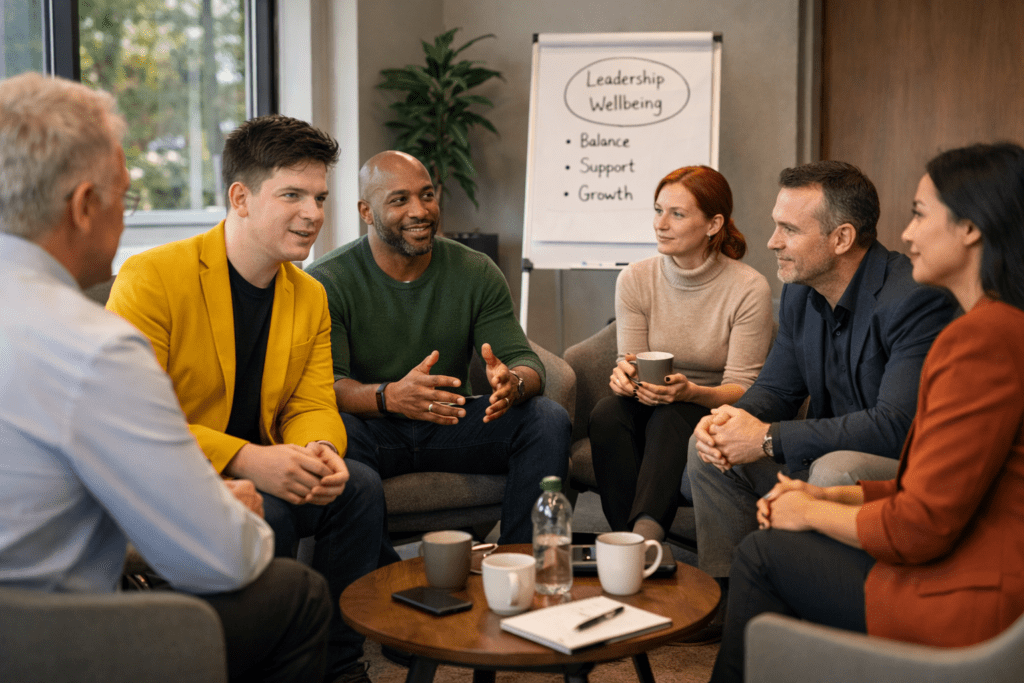
Leadership is starting to form its own version of ERGs, often without calling them that. Not because leaders want special treatment, but because the reality of leadership has changed. The pressure, isolation, pace, and emotional load of leading people in today’s working world have increased significantly, while the spaces to talk about it honestly have not. So alternative ERGs are emerging with different labels but the same purpose, and they’re worth paying attention to.
TL;DR – Blog Summary
Alternative ERGs are emerging in leadership, even if they’re not called that. Organisations are creating peer networks, leadership circles, and executive wellbeing groups because traditional leadership development doesn’t address isolation, pressure, or sustainability. These spaces give leaders somewhere to speak honestly, support each other, and lead well for longer. Supporting leaders’ wellbeing isn’t indulgent, it’s strategic.
Why leadership doesn’t fit the traditional ERG mould
Leaders aren’t a protected characteristic. They’re not a marginalised identity group in the traditional sense. Which is why, historically, support for leaders has been framed almost exclusively as development, training, or performance management.
Courses, frameworks, models, and toolkits are useful, but incomplete. What’s missing is space, and not for learning how to lead, but for being human while leading.
- For founders, that often shows up as identity loss, financial pressure, and feeling solely responsible for everything
- For leaders inside organisations, it shows up as emotional containment, decision fatigue, and responsibility without control
- For HR teams, it shows up later, through burnout data, disengagement scores, and quiet attrition
Many leaders experience these pressures privately, while publicly supporting everyone else’s wellbeing initiatives. That tension is what’s driving the rise of alternative leadership ERGs.
What these leadership ERGs actually look like
They rarely carry the ERG label, but functionally, they serve the same purpose.
Some of the most common forms include:
- Leader peer networks
Confidential spaces where leaders at similar levels come together to talk honestly about what they’re dealing with. Less best-practice sharing, more lived experience. These are particularly valuable for founders and senior leaders who have few true peers.
This is often where structured leadership mentoring becomes a powerful complement. - Manager communities of practice
Often designed for people leaders, particularly first-time managers. These groups focus on boundaries, confidence, decision-making, and navigating difficult conversations, not just managing performance.
When supported well, they sit naturally alongside leadership wellbeing workshops that build shared language and trust. - Leadership forums or circles
Smaller, intentional groups that meet regularly. These tend to centre on reflection, self-awareness, and sustainable leadership rather than constant problem-solving.
Many organisations introduce the following as an internal leadership talk or keynote to open up the conversation safely. - Executive wellbeing groups
Still relatively rare, but growing. These give senior leaders space to talk openly about pressure, burnout risk, identity, and the personal cost of leadership.
For HR and Boards, these groups often become an early-warning system rather than a crisis response. - Transition-based leadership groups
Formed around moments of change, stepping into leadership, scaling teams, navigating restructures, post-merger leadership, or returning after illness or burnout.
These moments are where targeted facilitated support makes the biggest difference.
They may have different names, but have the same underlying need. A place where leaders don’t have to perform leadership.
Why organisations are starting to support them
This isn’t a soft trend. It’s a strategic one.
- HR teams are recognising that leaders set the emotional tone of teams
- Founders are recognising that pace without sustainability eventually costs more than it creates
- Boards are recognising that burnt-out leaders quietly increase organisational risk
Psychological safety doesn’t cascade if leaders don’t feel it themselves, and you can’t ask leaders to champion wellbeing if they have nowhere to practise it. Supporting leaders isn’t indulgent; it’s preventative.
Where many organisations get stuck
The most common mistake is good intent without good design. Leadership support spaces often fail because they’re too formal, too vague, framed as “fixing leaders,” or bolted onto existing wellbeing strategies without understanding leadership dynamics.
This is where an external perspective matters. Leadership ERGs need trust, clarity of intent, and skilled facilitation. They need to prioritise psychological safety over hierarchy, and reflection over performance. Without that, they quickly become just another meeting leaders feel obliged to attend.
A different way of thinking about leadership support
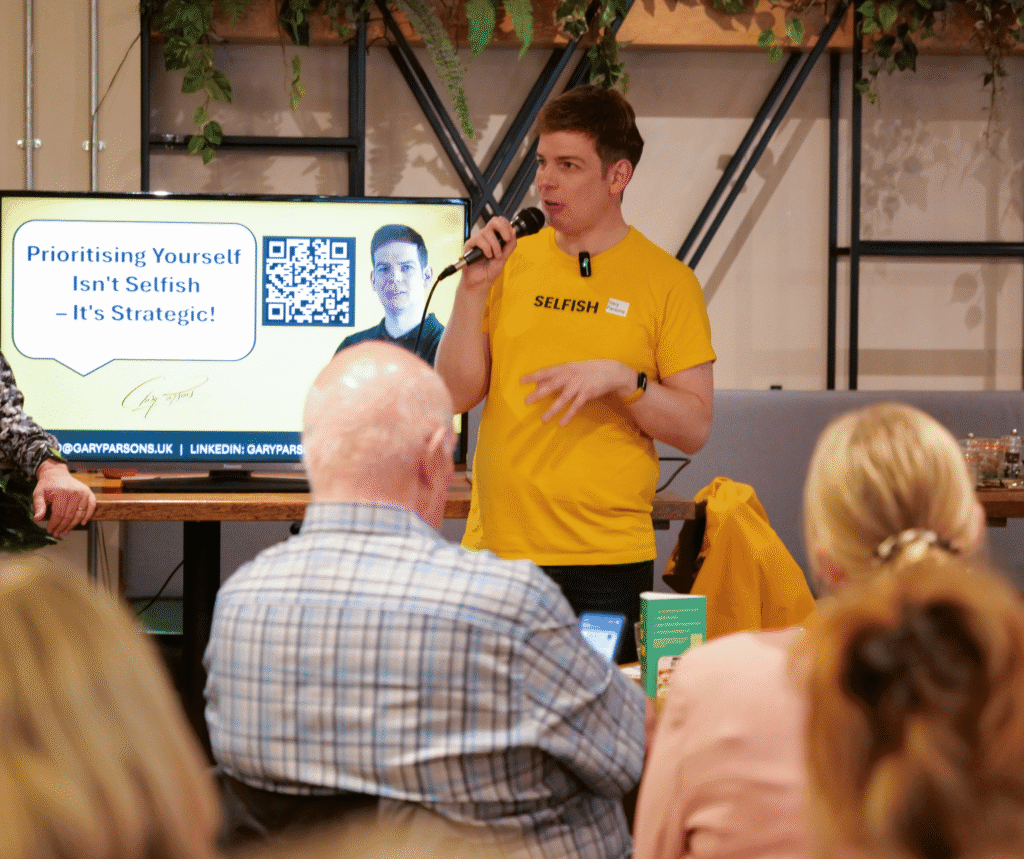
The most effective leadership ERGs don’t treat resilience as endurance. They treat it as sustainability, and recognise that prioritising your own wellbeing as a leader isn’t selfish, it’s responsible. Strategic, even. This reframing is often the turning point for founders, leaders, and HR teams alike. It shifts the question from:
- “How do we help leaders cope?”
To: - “How do we help leaders lead well, for longer, without losing themselves in the process?”
This is where training, mentoring, and speaking work best together, not as standalone interventions, but as part of a joined-up leadership wellbeing strategy.
Where Support is Available
More organisations are starting to ask how they can support leaders without turning wellbeing into another performance metric.
When leadership ERGs are designed well, they don’t feel like programmes or interventions. They feel like space. Space to think, reflect, recalibrate, and lead more intentionally. That kind of support doesn’t happen by accident, and it rarely works when copied from a template.
My work focuses on helping organisations, founders, and leadership teams design and support these spaces in a way that’s credible, psychologically safe, and grounded in the real experience of leading people. Not to fix leaders, but to help them stay well enough to lead well.

Gary Parsons
https://garyparsons.ukGary Parsons is a Leadership Speakerand Business Mentor on a mission to redefine success in leadership. Drawing on his powerful SELF Framework, Gary helps leaders prioritise their own wellbeing because when leaders thrive, their teams do too. Through his talks, workshops, and mentoring, he equips leaders to set boundaries, elevate wellbeing, and lead with intention - proving that Selfish Leadership isn’t a weakness, it’s a strategy for sustainable growth. Reach out to explore how Gary can help your leaders perform better by putting themselves first, strategically.